
| TL;DR: In an era of AI-driven search, “walls of text” are obsolete. Content Chunking is the process of breaking information into modular, high-intent blocks that allow AI engines to retrieve and display your content instantly. By prioritizing Text Structuring, you ensure your brand is the primary source for Featured Snippets and AI Overviews. |
Traditional SEO often focuses on keyword density, but AI Optimization focuses on “retrievability.” AI models, like those powering Google’s Search Generative Experience (SGE), don’t “read” an article from start to finish; they parse for specific, modular answers.
If your content isn’t chunked, these models struggle to parse your data, leading to missed opportunities in Featured Snippets. Modern AI SEO services prioritize this modular approach to ensure that every section of your blog acts as a standalone answer to a user’s query.
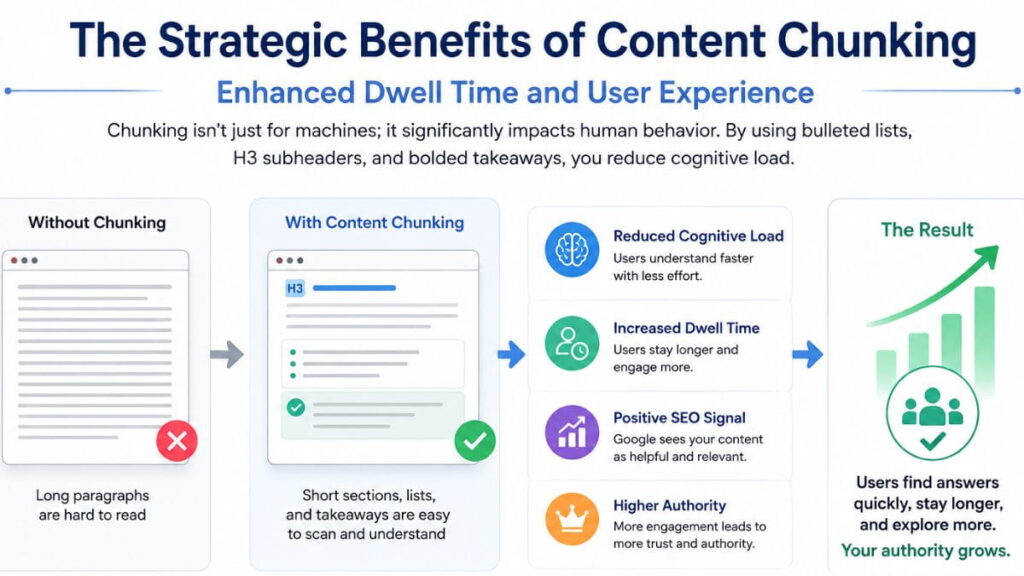
Chunking isn’t just for machines; it significantly impacts human behavior. By using bulleted lists, H3 subheaders, and bolded takeaways, you reduce cognitive load. This leads to increased Dwell Time, a signal that tells Google your content is helpful and relevant. When users find answers quickly, they are more likely to stay and explore, further boosting your authority.
On small screens, massive paragraphs are intimidating and difficult to navigate. Content Chunking is a fundamental part of Mobile Optimization. It allows mobile users to scan for the “Execution Layer” of your advice without getting lost in fluff. At Ooptiq, we integrate this into every Content Audit to ensure your digital presence is as fast as the modern web.
At Ooptiq, we don’t just write blogs; we build citable assets. Our AI SEO services focus on bridging the gap between technical architecture and growth-led content. We ensure your brand remains at the cutting edge of how information is consumed in 2026.
Ready to modernize your content? Book a Content Audit with Ooptiq today.
Content Chunking is a Text Structuring technique where long-form information is broken down into small, digestible “chunks.” It works by organizing data into logical modules using headers, lists, and short paragraphs, making it easier for both humans and search engines to process.
AI models use “vector search” to find the most relevant block of text for a query. By chunking your content, you provide AI with clear, isolated sections that are easy to index and retrieve for Featured Snippets or AI-generated summaries.
It improves both. While it directly increases AI visibility, the resulting improvement in Dwell Time and mobile-friendliness sends positive signals to traditional Google search algorithms, leading to higher overall rankings.
The ideal structure includes a clear H2 question, a 40–60 word direct answer (for snippet targeting), followed by supporting data in a bulleted list or table. This “inverted pyramid” style is the gold standard for AI Optimization.
Traditional writing often uses long, narrative transitions to build a case. Content chunking prioritizes “modular utility,” ensuring that each section can stand alone and provide value without requiring the reader to consume the entire piece.